An archive

Rashti-Duzi

رشتی‌دوزی

An Embroidered Textile Originating from the City of Rasht, Iran

↓   Begin with the history
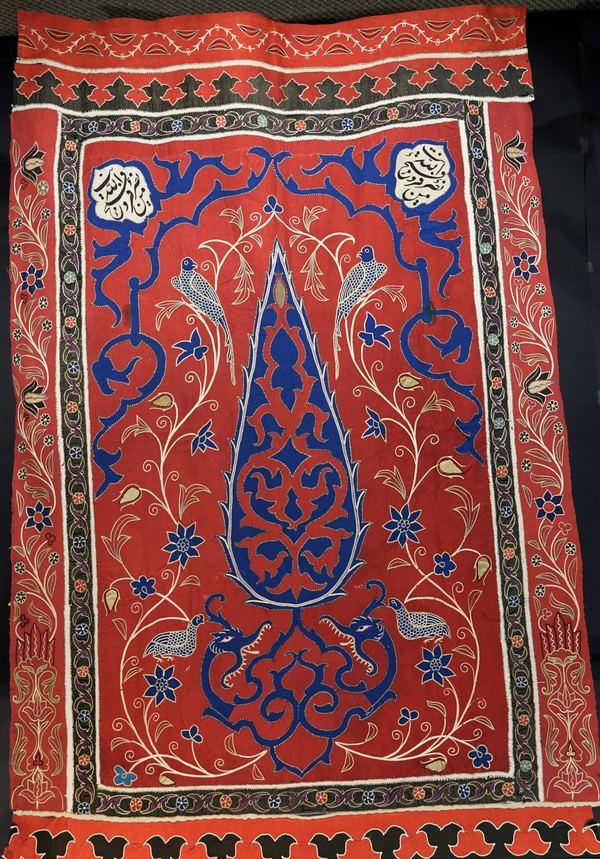
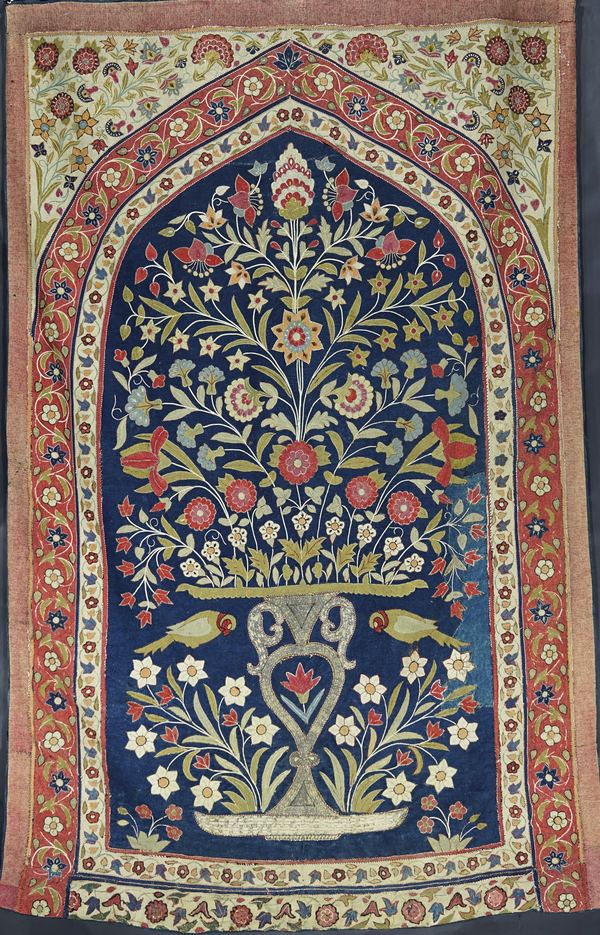
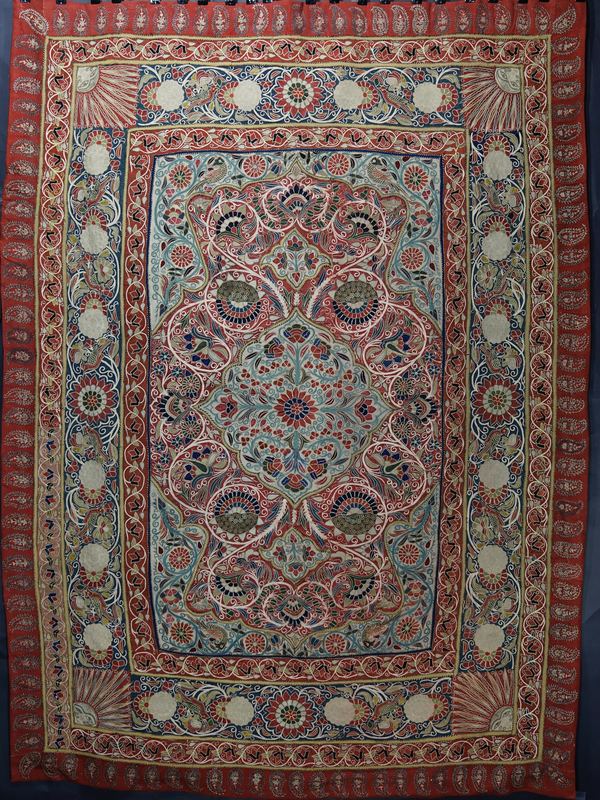
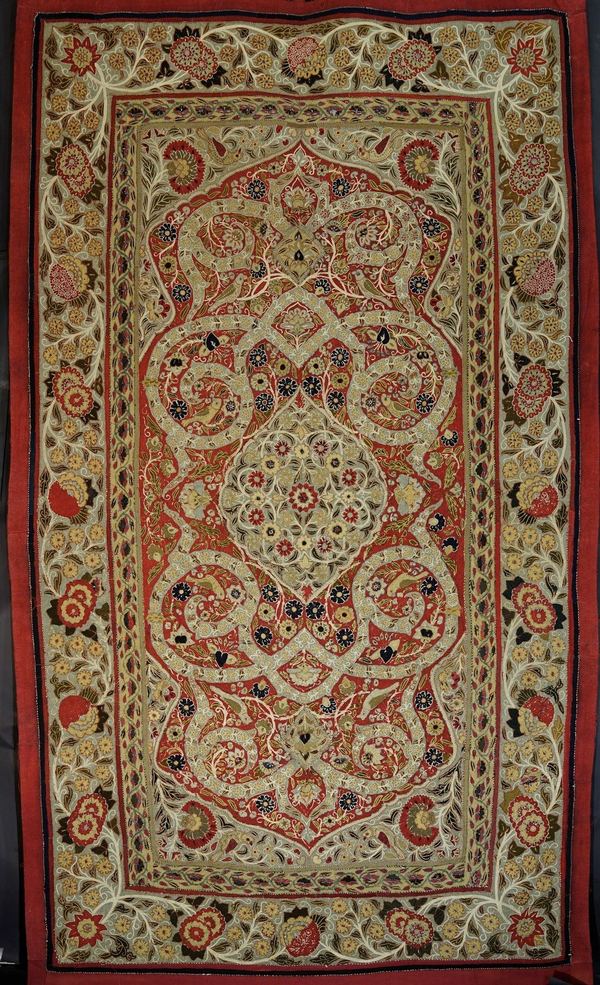
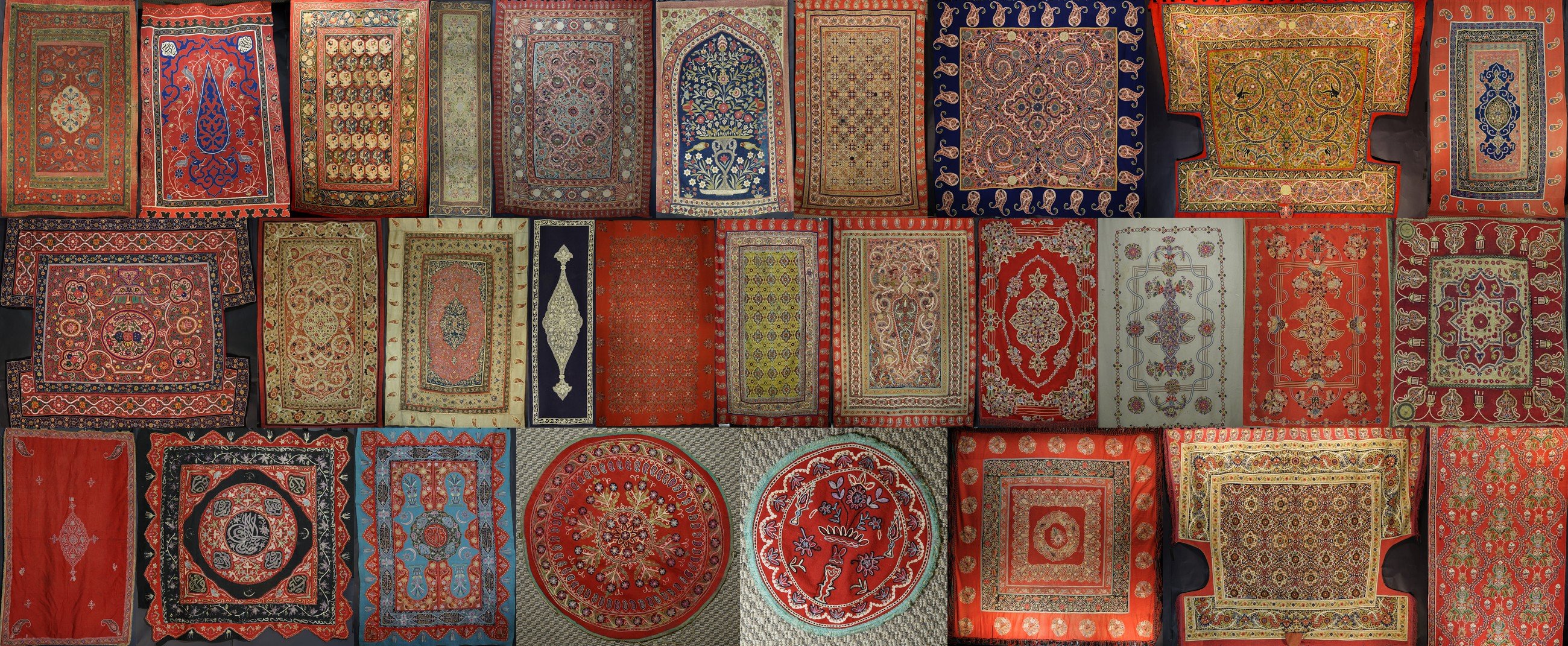
A mosaic of Rashti-Duzi panels

Rashti-Duzi and the City of Rasht

Rasht is the capital and largest city of the Gilan province, located in northern Iran south of the Caspian Sea. The city features a subtropical wet climate and is surrounded by lush forests. During the 17th-century Safavid period, Rasht was merely a village. It evolved into a small town by the end of the Safavid and Zand periods when trade with Europe began across the Caspian Sea.

With the expansion of European trade during the Qajar period, Rasht became known as the "Gate to Europe." The city's population grew rapidly due to this increasing commerce and the settlement of refugees following the Russo-Persian War. During this era, Rasht transformed into a diverse urban center populated by Gilaks, Turks, Armenians, and a small Jewish minority, establishing itself as a hub of trade and intellectual life. Additionally, Rasht served as the center of the silk trade, offering easy access to flannel fabric. The presence of skilled professionals capable of dyeing silk ultimately made the creation and production of Rashti-Duzi possible.

The Evolution of Rashti-Duzi

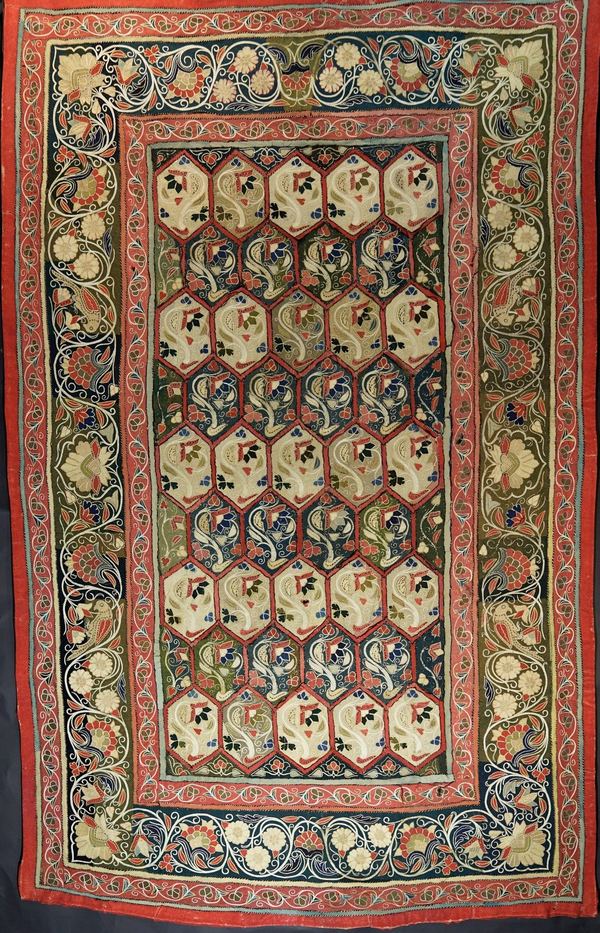
Rashti-Duzi began in the first quarter of the 19th century as a patchwork embroidery textile, but over time it transitioned into a simple chain-stitch embroidery. Because of this evolution, its definition changed over the years. Originally, it was an embroidered textile featuring a flannel fabric foundation. Miniature, multicolored pieces of the same fabric — cut into various shapes and colors — were fitted into this foundation and secured with multicolored silk thread chain-stitching (patchwork). By the early 20th century, Rashti-Duzi had evolved into a simpler chain-stitch embroidery on a flannel fabric base, where multicolored silk threads filled the pre-drawn design areas.

Learn more about Rashti-Duzi

Faith & Practice

Sufism

Sufism significantly influences the art of Rashti-Duzi, making a brief explanation of its faith and practices essential. Sufism is the mystical and spiritual path within Islam. Its followers seek a direct, personal experience with God through the inward purification of the soul, intense devotion, and divine love. They lead a humble and simple lifestyle, believing that they possess nothing and nothing possesses them except God. Instead of pursuing materialism, they focus on clearing the stains of the ego to achieve spiritual purity.

Sufis practice meditation to reach a state of altered consciousness, which they believe brings them closer to the divine. Freed from the desire for material rewards, they express their minds without constraint. Consequently, they rarely sign their artwork, except under specific circumstances, making it difficult to identify the creators of these pieces today. Music, singing, dancing, and poetry reading are also vital components of their rituals.

Artists

Works by Artist

The collection is organized by artist. Each section presents the artist's background, techniques, and documented works. Click any panel to explore its full story, iconography, and historical context.

Active c. 1820–1845 · Rasht & Khomam, Gilan

Fath’Ali Khomami Sr.

فتحعلی خمامی (پدر)

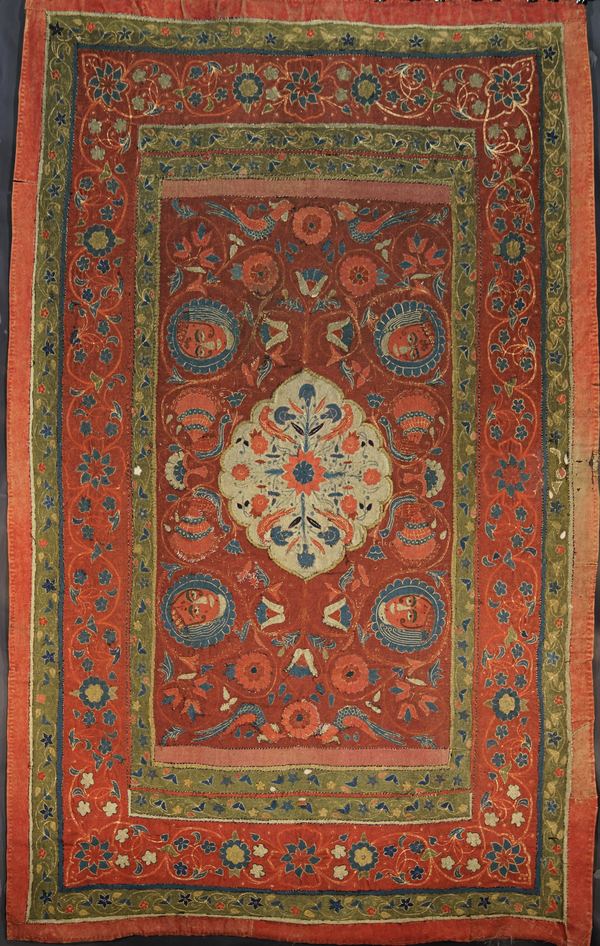
Fath’Ali Sr.’s signature appears on one of two Rashti-Duzi royal tents housed in the Cleveland Museum of Art. A native of Khomam, a village north of Rasht, Iran, Fath’Ali Sr.’s active period spanned the reigns of Fath’Ali Shah Qajar (1797–1834) and Mohammad Shah (1834–1848), coinciding with the governorship of Prince Yahya (son of Fath’Ali Shah) in Gilan.

Fath’Ali Sr. is credited as the creator of Rashti-Duzi, as no surviving pieces predate his work. A multi-talented artist, significant evidence indicates he was also a prominent contemporary painter and potentially a stained glass designer. His devotion to Sufism deeply informed his creative output. While one of his sons, Fath’Ali Khomami Jr., also known as Agha Koochek, pursued an artistic career following his father’s path, Fath’Ali Sr.’s biography — including his birth, death, and social life — remains unrecorded and warrants further historical investigation.
More about Fath’Ali Khomami Sr.

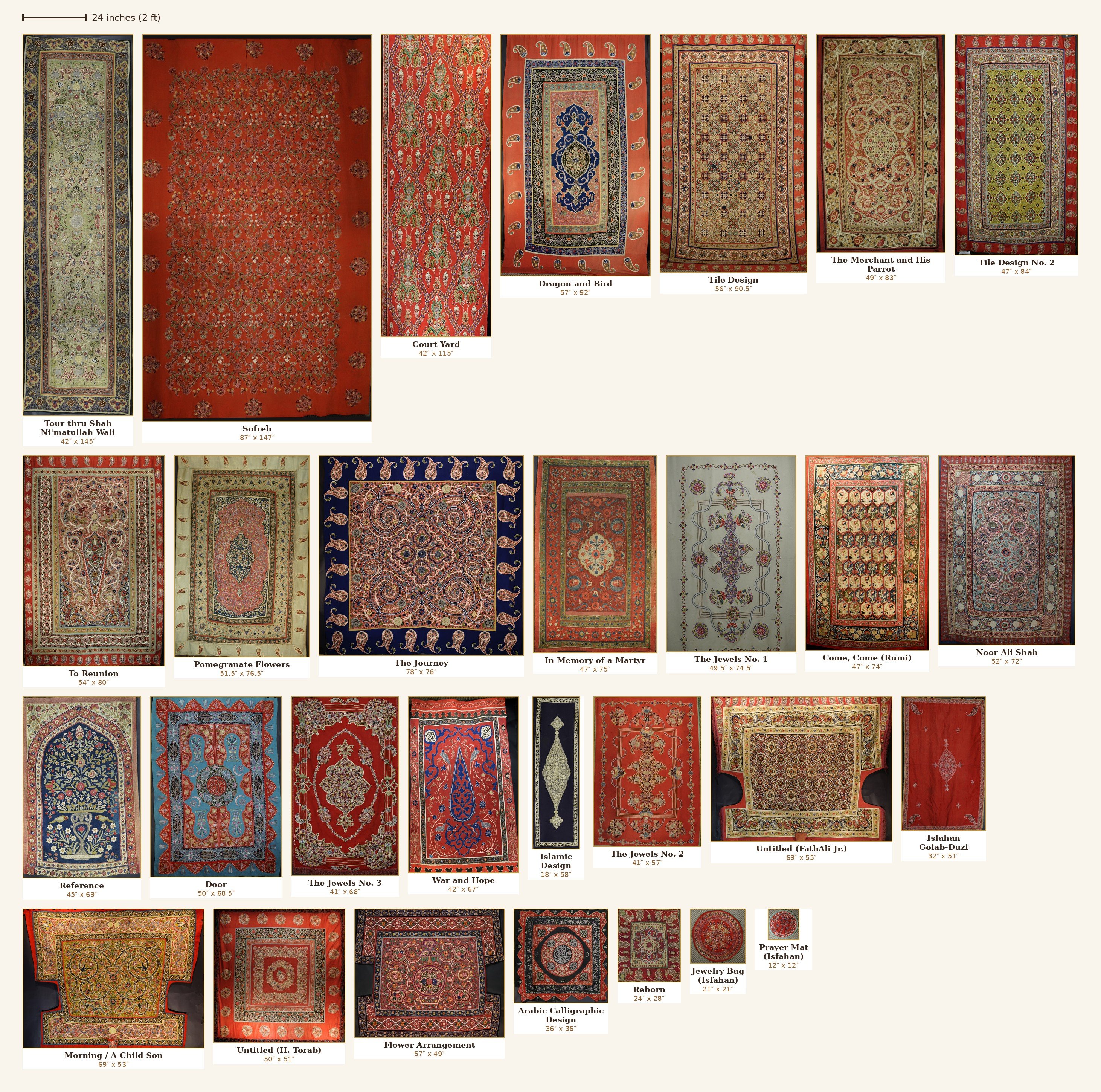
All Rashti-Duzi panels shown at true relative scale
The documented Rashti-Duzi panels shown at true relative scale.