What Is Rashti-Duzi?
Rashti-duzi (Persian: رشتیدوزی), also known as Rasht embroidery, takes its name from the city of Rasht in Gilan, northern Iran, where it was made: duzi (دوزی — from the verb dukhtan, “to sew”) means “stitchery” or “needlework,” so the term means, simply, “the needlework of Rasht.” It is a distinctive craft in which pieces of coloured broadcloth are joined and then worked over with fine silk chain-stitch embroidery.
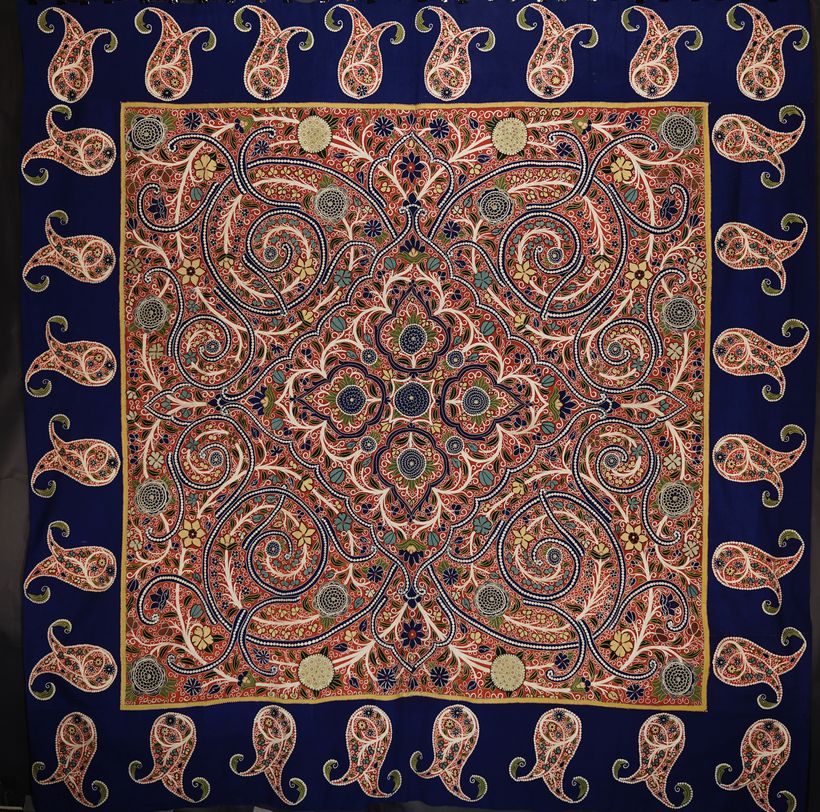
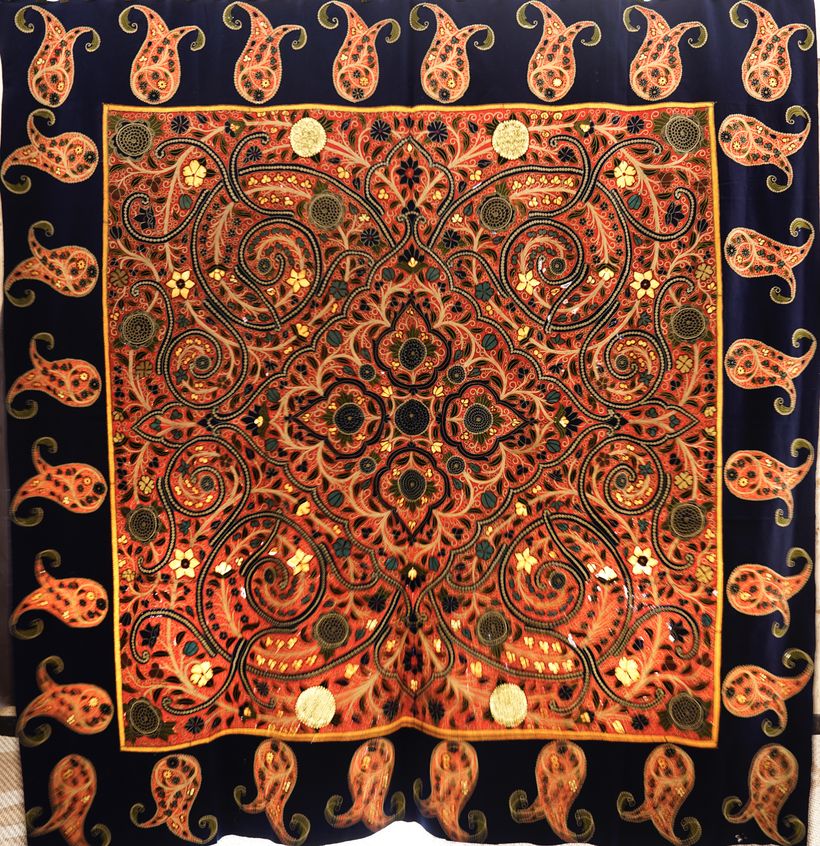
Front-lit and back-lit. Transillumination reveals the pieced construction — panels of broadcloth joined edge to edge beneath the chain-stitch embroidery.
Creation of Rashti-Duzi
In the early first quarter of the 19th century, Fath’Ali Shah decided to modernize military outfits in the European style, ordering the import of olive-green flannel fabric for military uniforms. This import was facilitated through the Caspian Sea. Rasht, the commercial heart of Gilan and — through its Caspian trade routes — Iran’s “Gate of Europe,” was the crossroads where that imported flannel, local silk, and skilled dyers all came together. The availability of this flannel, along with silk thread, professional textile dyers, and, most importantly, the creative vision of Fath’Ali Sr., made the creation of Rashti-Duzi possible. Historically, Sufis were experts in patchwork, utilizing fabric felt to craft distinctively shaped hats. However, no textiles matching the modern definition of Rashti-Duzi exist from before the reign of Fath’Ali Shah, as flannel fabric was not previously available in the region.
How It Is Made
Rashti-Duzi is worked with a fine metal crochet hook rather than a conventional needle — this single distinction defines its character. The hook pulls twisted silk thread through a dense wool ground fabric in continuous chain stitches, building up dense, jewel-like surfaces of color.
Preparing the ground fabric
The base is flannel — a tightly woven, fine wool worsted cloth, most traditionally in deep crimson red. Its density is essential: it must hold the hook's entry without fraying and support the weight of dense silk embroidery.
Transferring the design
The design is transferred onto the fabric by pouncing — a stencil is placed on the cloth and powdered chalk is dusted through the perforations, leaving a faint dotted outline of the pattern on the surface. Master embroiderers could also draw freehand from memory.
Chain stitch embroidery
Using a fine metal crochet hook (ghollāb-duz), the embroiderer works from the surface, pulling twisted silk threads up through the fabric in a continuous chain stitch. Unlike needle embroidery, the hook allows a faster, more fluid rhythm. Colors are worked area by area, following the chalked design.
Appliqué inlay (in advanced types)
In the more elaborate forms of the craft (patchwork and inlay), pieces of colored flannel are cut and inlaid into the base fabric, or patched together edge to edge, before the chain-stitch embroidery is applied to cover and secure the joins. This creates a mosaic-like ground beneath the silk.
Filling and finishing
The entire surface within the design is filled with chain stitch, leaving almost no ground visible. Borders are often worked last, framing the central composition with repeat geometric or paisley bands. Large panels — tablecloths, wall hangings, prayer rugs — could take months or years to complete.
What the Craft Requires
Each element of Rashti-Duzi is chosen for a specific quality — the density of the wool, the sheen of the silk, the precision of the hook. The craft demands both fine materials and specialized tools passed down through workshop generations.
Flannel
Fine wool worsted cloth. Dense enough to hold chain stitches without puckering. Traditionally crimson red, but also available in navy, black, and ivory.
Twisted silk thread
Firmly twisted, high-sheen silk in a full spectrum of colors. The twist is essential — it locks the chain stitches and gives the surface its characteristic gloss.
Metal crochet hook
The ghollāb-duz — a fine, sharp-tipped metal hook. The defining tool of the craft, used in place of a needle. Its angle and weight are calibrated for pulling silk through dense wool.
Chalk & stencil
Powdered chalk is pressed through perforated paper stencils to transfer the design. This creates a faint guide eventually covered by the embroidery. Workers then connect the dots using a pencil marker; historically, they used sharp-edged soap because it washed out easily.
Embroidery frame
A large rectangular wooden frame keeps the flannel taut to prevent distortion from dense stitching. Recently used for smaller pieces, workers previously sat using special pillows or specific leg positions to secure the panel.
Precision scissors
For the patchwork and inlay types, finely ground scissors are needed to cut the flannel to exact shapes without fraying the dense weave.
Three Distinct Forms of Rashti-Duzi
Rashti-Duzi began as an elaborate mosaic patchwork and simplified over time. These three forms mark that historical progression, and they are distinguished by one fundamental question: what happens to the base cloth?
Embedded
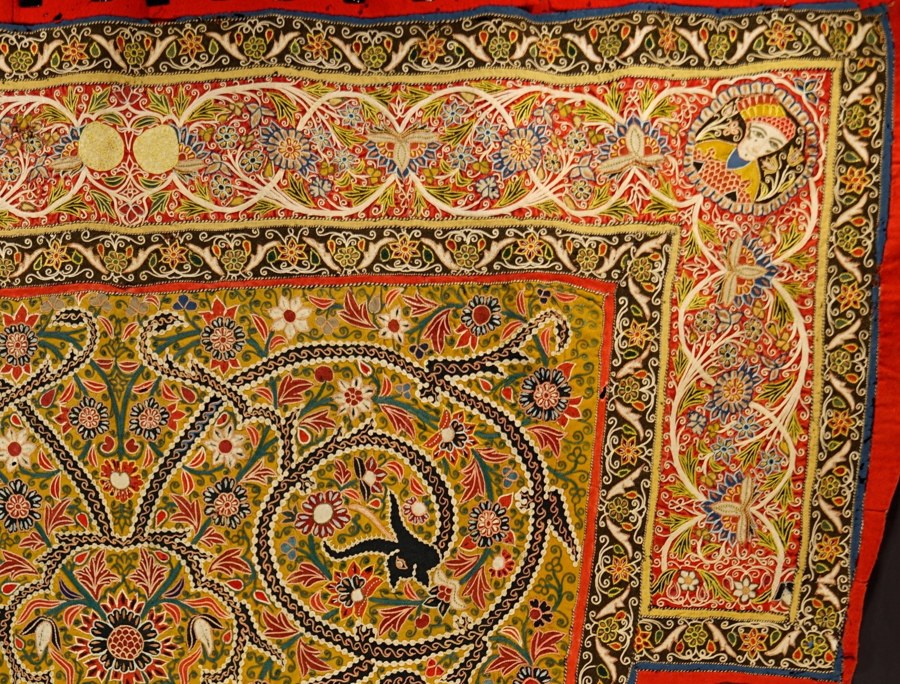
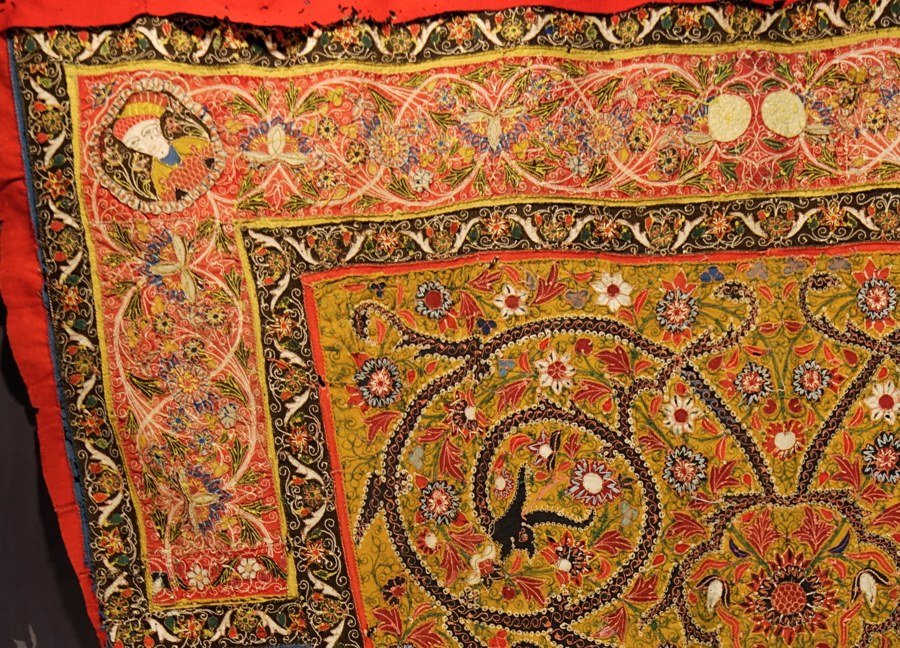
The base flannel is marked out, and shaped sections are cut away entirely, much like a cookie cutter. Pieces of contrasting flannel, cut to the exact same shapes, are set into the openings so they sit completely flush with the surrounding cloth. The seams are then bound and covered with a fine chain stitch. The result is a seamless mosaic—the inserted piece becomes part of the cloth's own layer rather than an addition to it. This is the oldest, most demanding, and most prestigious form of the craft.
Inlaid
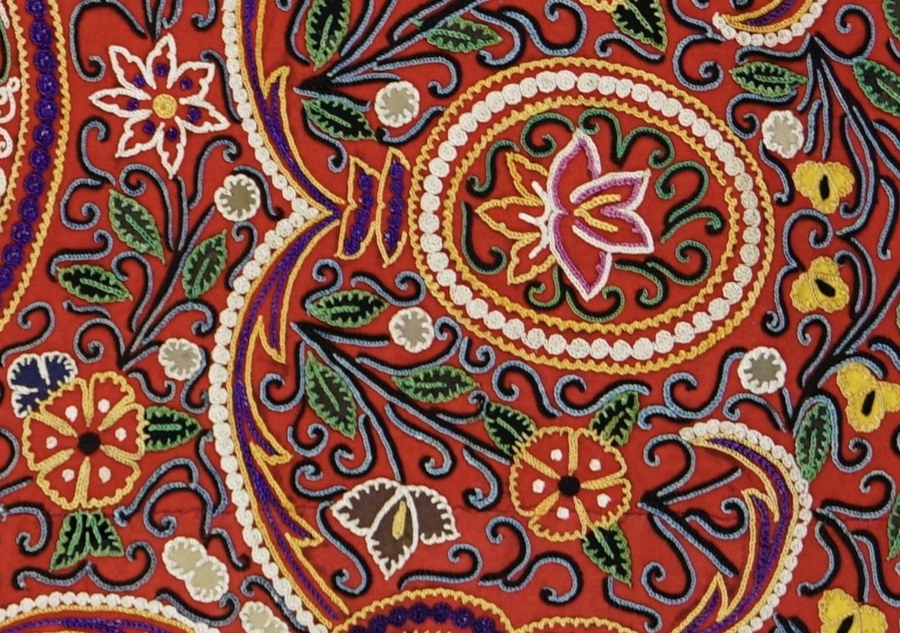
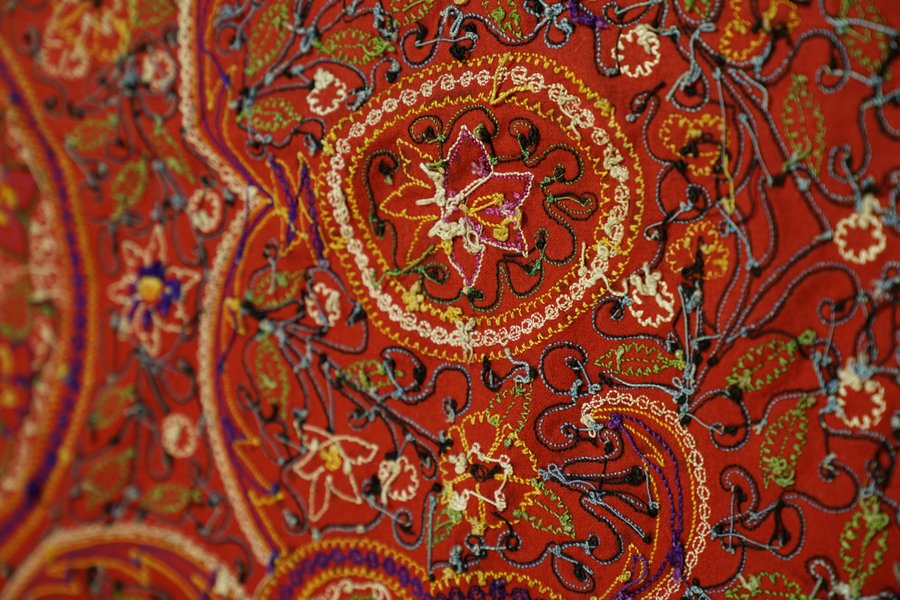
The base flannel is marked out, but the ground fabric is left entirely intact. Pieces of contrasting flannel are cut to the pattern shapes and laid over the top of the base, then secured and outlined in dense chain stitch. The result stands slightly proud of the ground, creating a visible, tactile edge where each piece sits. This method is simpler than embedded and far more forgiving of error—a misplaced piece can be cleanly lifted and repositioned rather than ruined.
Simple Embroidery
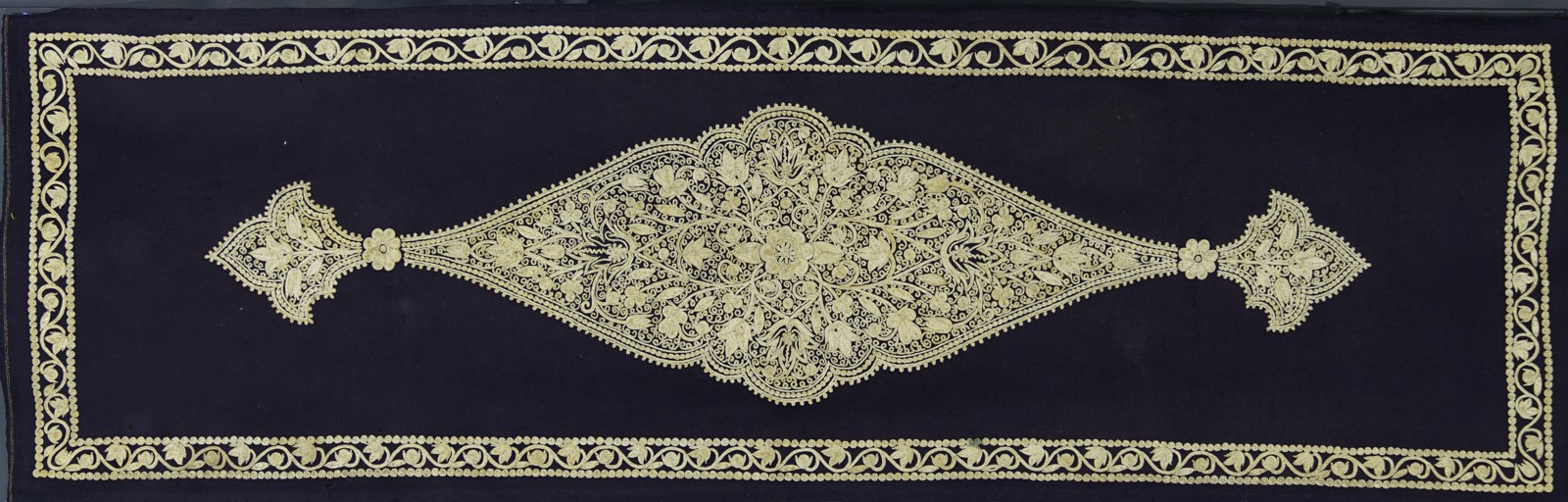
The base flannel is marked out and the design is filled entirely with multicolored silk chain stitch alone. This style requires no second cloth, no cutting, and no piecing. The surface stays completely flat, and all the color and texture come strictly from the silk thread itself. This represents the latest, most accessible form of Rashti-Duzi.
Forms of Rashti-Duzi Art
Historically, Rashti-Duzi began as a creative, painting-like textile art. During the Fath'Ali Sr. era, production was limited to wall hangings, portraits, royal tents, and houses of worship. Later, Fath'Ali Jr. introduced horse covers. Under Naser al-Din Shah, the craft expanded into household items such as tablecloths, sofreh (ceremonial mats), prayer accessories, jewelry bags, clothing, and diplomatic gifts. The Pahlavi era introduced framed decorative panels. Today, Rashti-Duzi is used for modern consumer goods, including bags, shoes, fashion fabrics, and framed art.
Wall hangings
Large panels for palace and home interiors, often depicting garden scenes, hunts, or narrative compositions.
Ceremonial mat
Ceremonial spread cloth for feasts and weddings — among the largest and most prized pieces.
Gifts & diplomacy
Rashti-Duzi pieces were given as diplomatic gifts and royal offerings during the Qajar era.
Prayer items
Prayer rugs and mats, and tomb covers for shrines — sacred objects given extra reverence through craft.
Clothing & accessories
A more recent development, from the twentieth century onward: waistbands, cloaks, caps, and slippers made for a broader commercial market.
The Vocabulary of Motifs
Rashti-Duzi embroidery uses a complex vocabulary of motifs to create a rich textile iconography. To understand this art, we must recognize that it is deeply rooted in Iranian literature, history, culture, and Sufi mysticism.
Because of these deep cultural roots, Western audiences may initially find the motifs difficult to interpret. However, once the background and meaning of the subjects are explained, a new perspective emerges. Viewers will discover the immense creativity and advanced artistic expression of Rashti-Duzi artists, who were truly ahead of their time.
Iconography
In most Rashti-duzi works, every detail—including flowers, birds, reptiles, animals, colors, vases, cages, fruits, and numbers—holds a specific symbolic meaning that will be explained as each panel is presented. This practice of identifying and classifying motifs to better comprehend an artwork is known as iconography. Much like a puzzle to be solved, deciphering these symbols requires a deep familiarity with the culture of their origin; they form a visual language and vocabulary that must be learned. Artists, writers, and poets utilize this symbolic language to spark curiosity and engage their audience, allowing a single, potent motif to replace what would otherwise require a lengthy description.
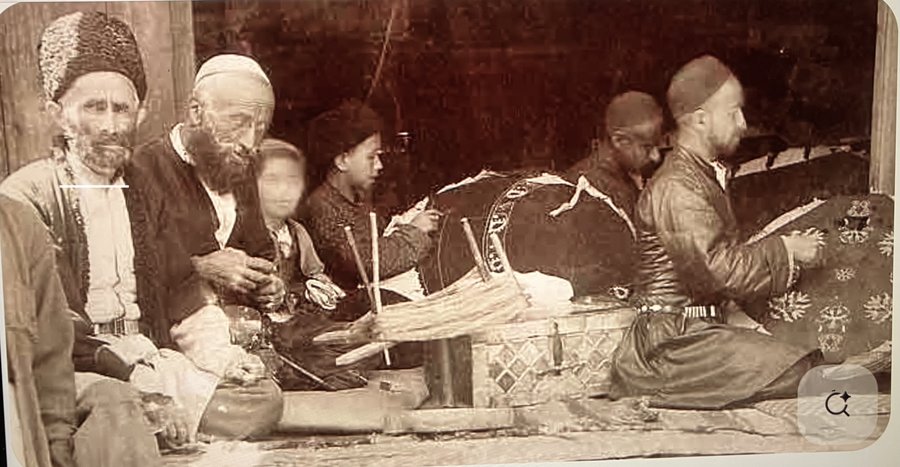
The Workshops and Their Signatures
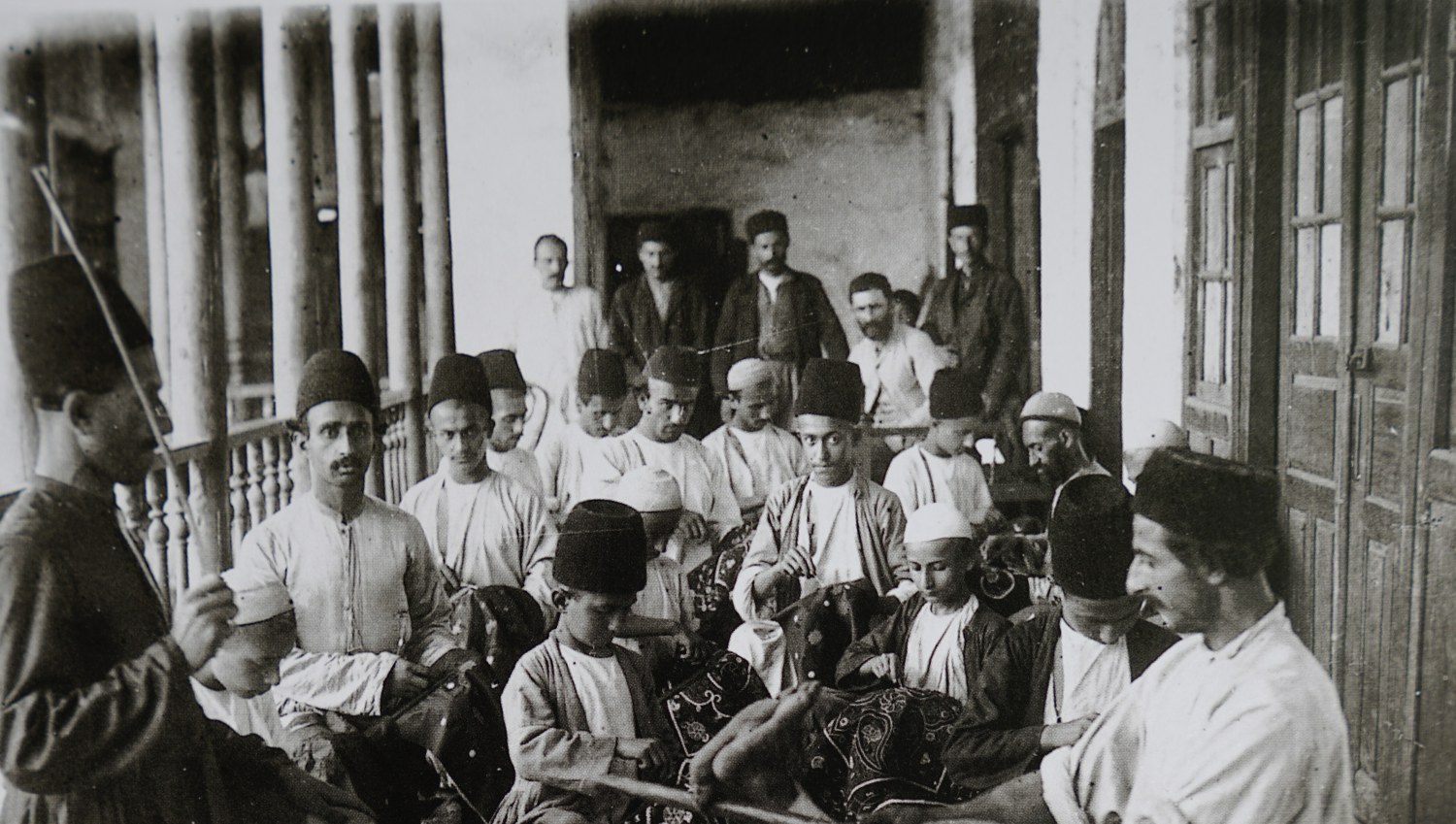
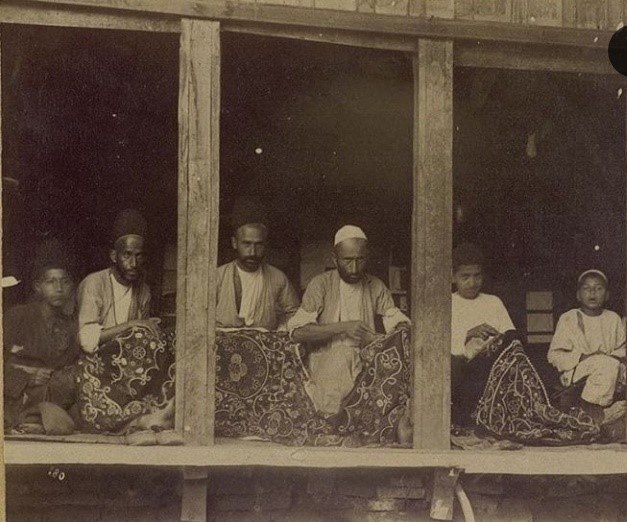
Rashti-Duzi was mainly made by male workers in the workshops. Children were also trained for delicate stitching and to become future professionals. The approach to making Rashti-Duzi was a collective effort, as each worker had skills in certain areas of embroidery. The head and owner of a workshop was an expert professional called an “Ostad” or Master, and the workshop was named after him. When we mention a work of Rashti-Duzi by a specific name, we mean it came from that workshop.
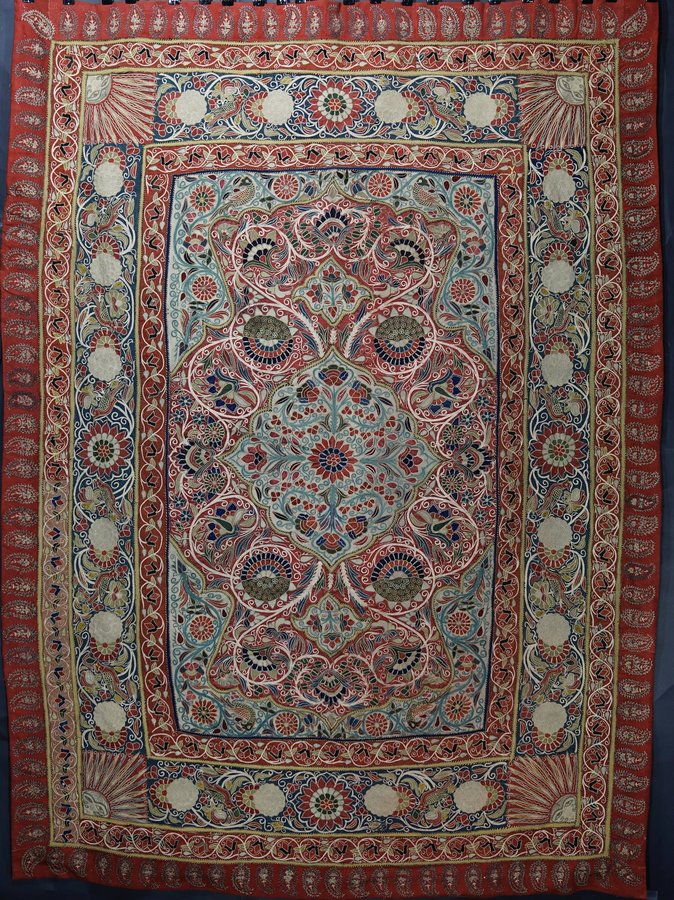
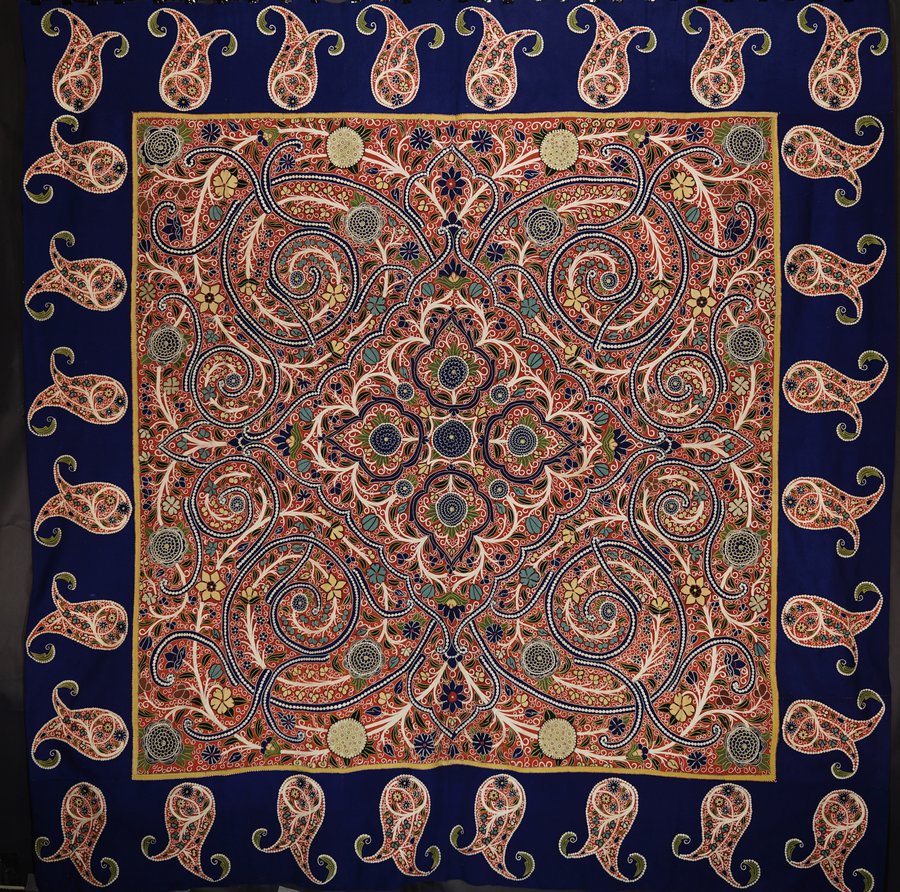
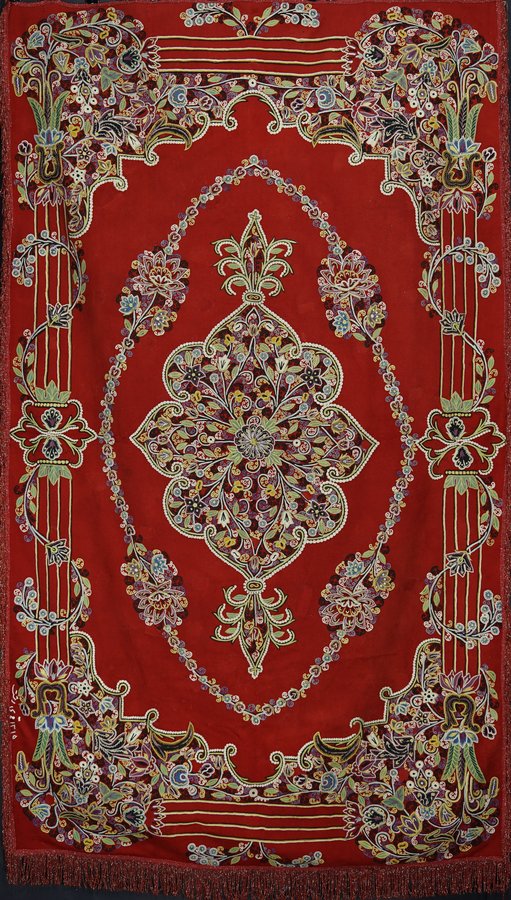
Few Rashti-Duzi pieces are signed, but signed and dated panels make the recognition of a workshop easier. Each workshop designed special patterns, allowing it to be recognized by those specific designs. Most Rashti-Duzi panels include two parts: the main design of the panel and the borders. The borders were usually made separately, and the same border pattern would be used repeatedly across different panels, making the work of that particular workshop recognizable. Another clue to recognizing the work of a particular workshop is that certain motifs in the main design are specific to that workshop and will be repeated in different panels. Specific border patterns and repeated motifs from a few workshops will be presented as examples.
← Back to Origins