Evidence of Fath’Ali Sr.’s Status as a Prominent Artist
Significant historical and visual evidence indicates that Fath’Ali Sr. was not only a master of textile art but also a prominent painter. This attribution is supported by several compelling factors:
- Mastery of Drawing and Composition: His Rashti-Duzi works, specifically his portraits, demonstrate a profound mastery of drawing and a unique ability to utilize different textiles to create elaborate figurative representations. His technical skill was undoubtedly advanced enough to bridge the gap into the medium of painting.
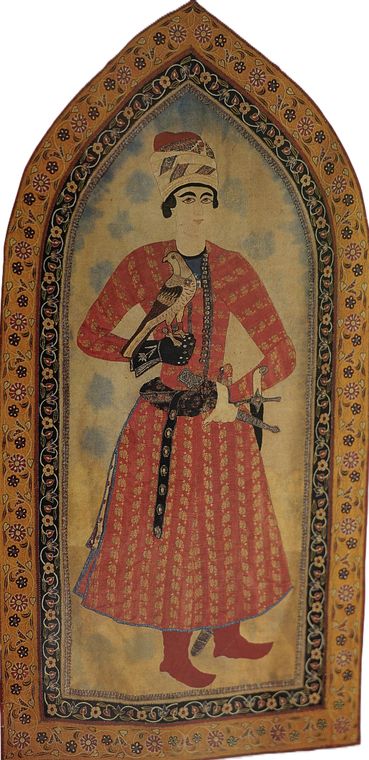
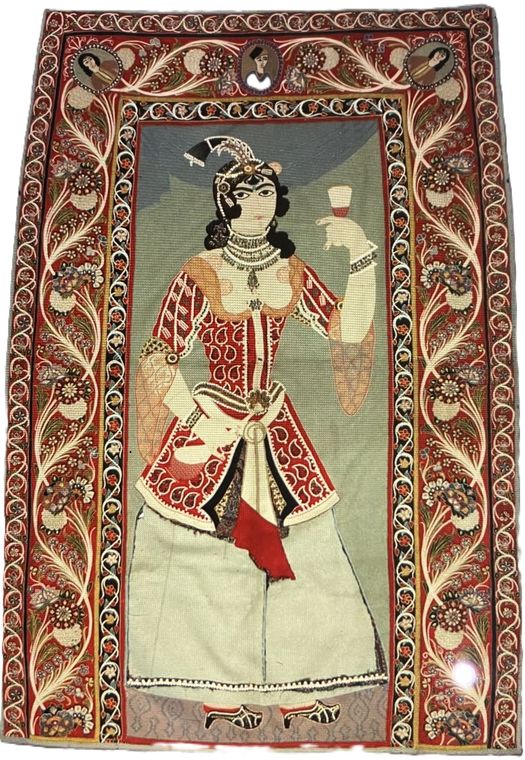
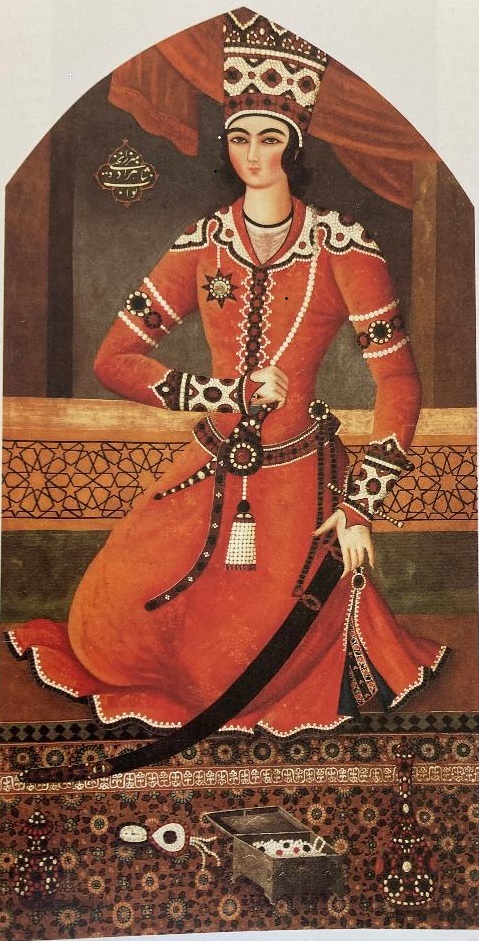
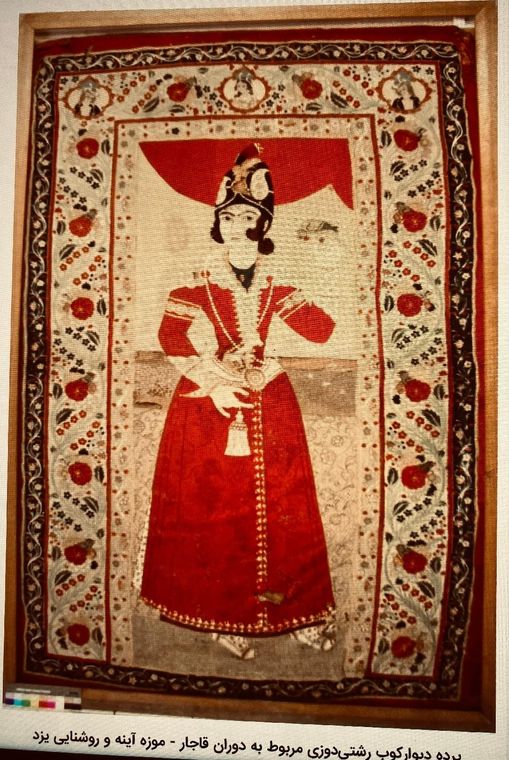
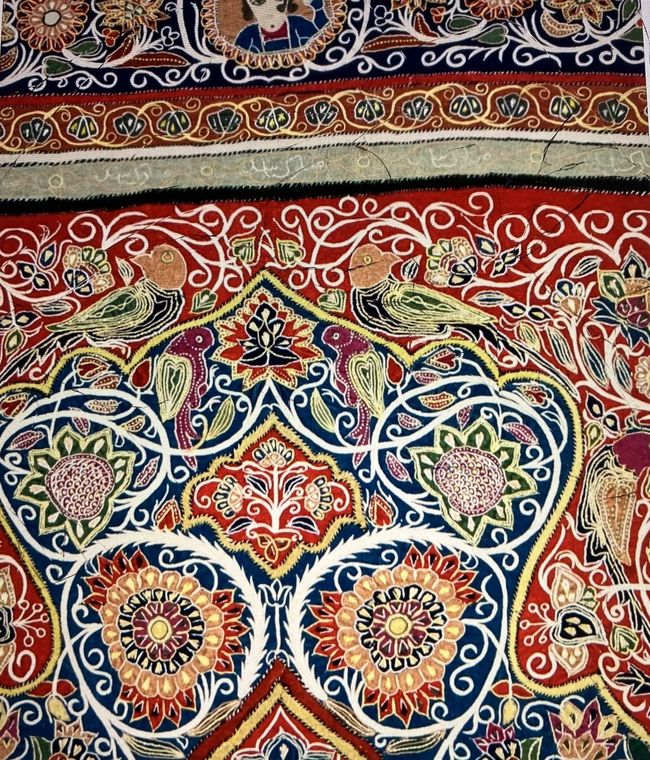
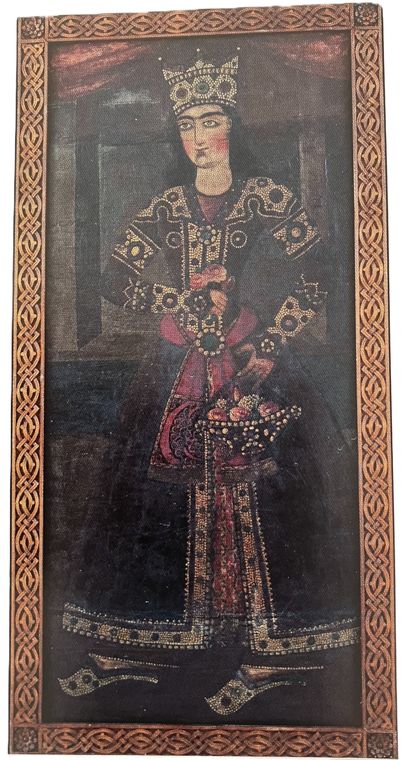
- The Portraits of Prince Yahya: Fath’Ali Sr. lived in Rasht during the period when Prince Yahya (son of Fath’Ali Shah) served as the governor of Gilan province. Two notable portraits of the prince survive today: an oil painting in the Brooklyn Museum and a Rashti-Duzi textile in the Museum of Mirrors and Light (Aeineh va Roshanaie) in Yazd, Iran. Both portraits depict a young Prince Yahya wearing near-identical attire, set against virtually identical foreground and background scenes. The Rashti-Duzi version is definitively attributed to Fath’Ali Sr.. Notably, the rose motif in the Rashti-Duzi matches the roses on the carpet in the foreground of the painting.
- The Sufi King Imagery: A portrait of Nur Ali Shah depicting him as a “Sufi King”—utilizing a larger-than-life artistic concept—shares striking compositional similarities with a Rashti-Duzi piece from my personal collection.
- Shared Background Motifs: Two pseudo-portraits of musicians share foreground and background compositions, as well as specific floor mat motifs, with the Brooklyn Museum’s Prince Yahya painting.
- The Symbolic Use of the Number Three: Fath’Ali Sr. frequently embedded the symbol of the number three into his Rashti-Duzi textiles. This identical symbolic numerical pattern appears across the attributed paintings (the deeper historical and spiritual significance of this symbol will be discussed in detail below).
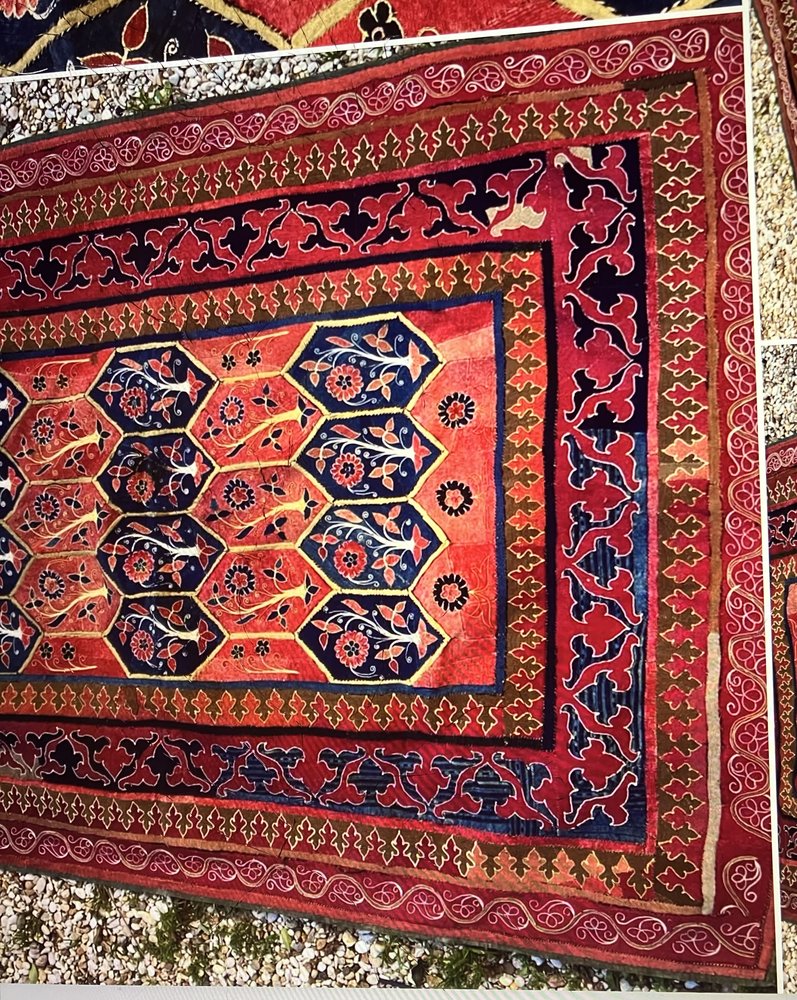
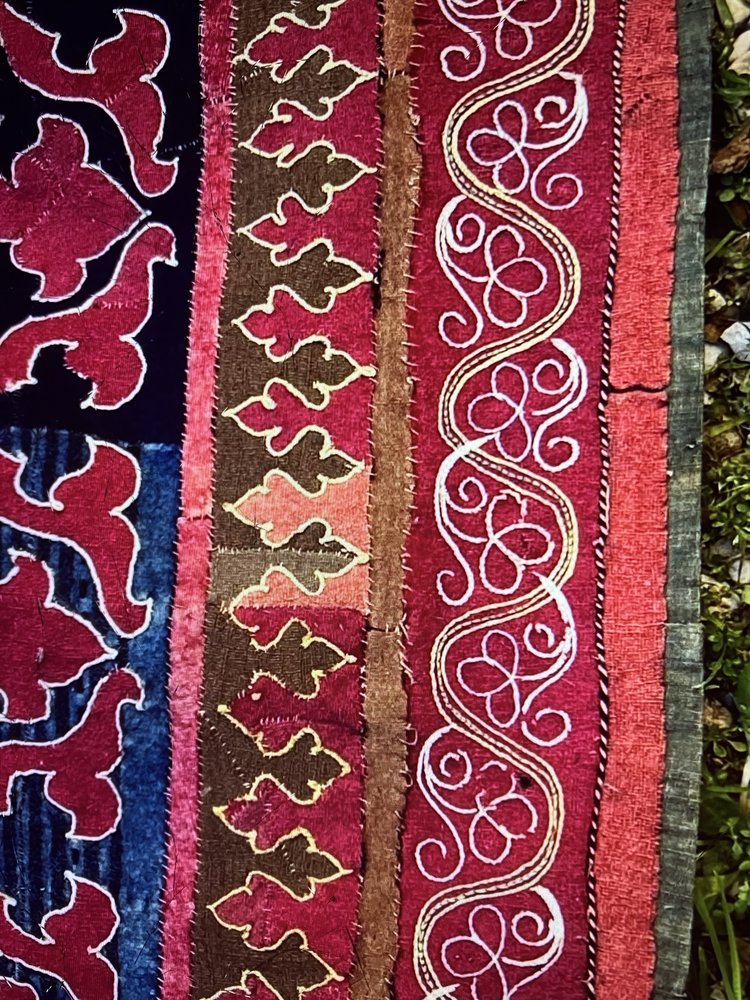
- The Use of Local Zarbin Wood: The frames used for at least three of these paintings appear to be crafted from Zarbin wood. Highly favored by locals for its excellent carving qualities, Zarbin is harvested from an evergreen tree native to the forested foothills of the Alborz Mountains, just south of Rasht. This wood features a soft beige hue and is naturally resistant to termites and moths, pointing directly to a northern Persian origin. (Note: All relevant images of these Rashti-Duzi textiles and paintings will be presented later in this study.)
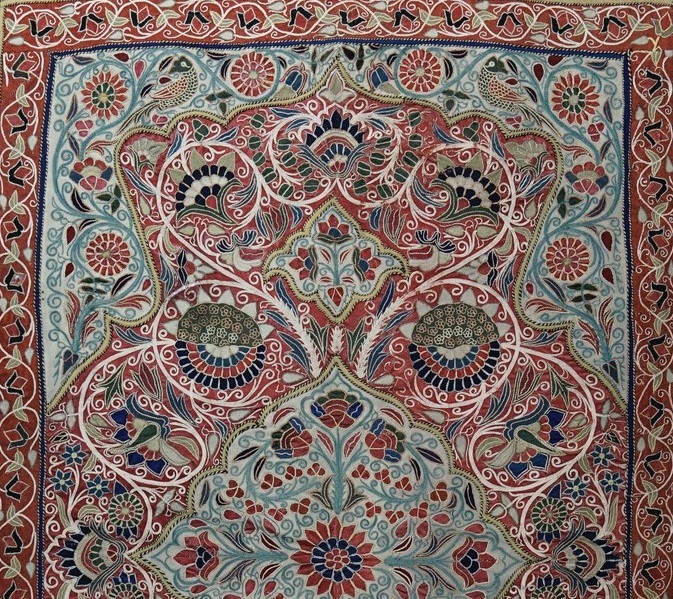
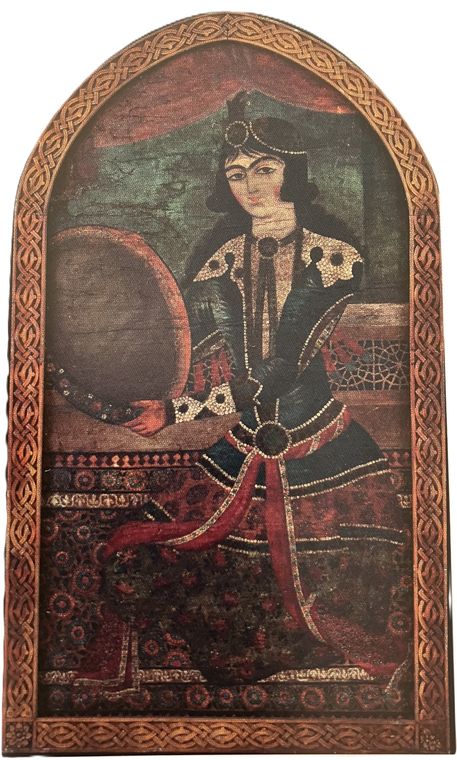
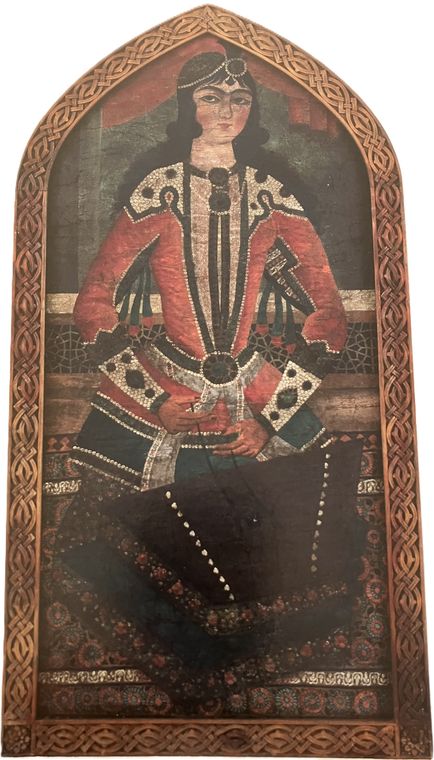
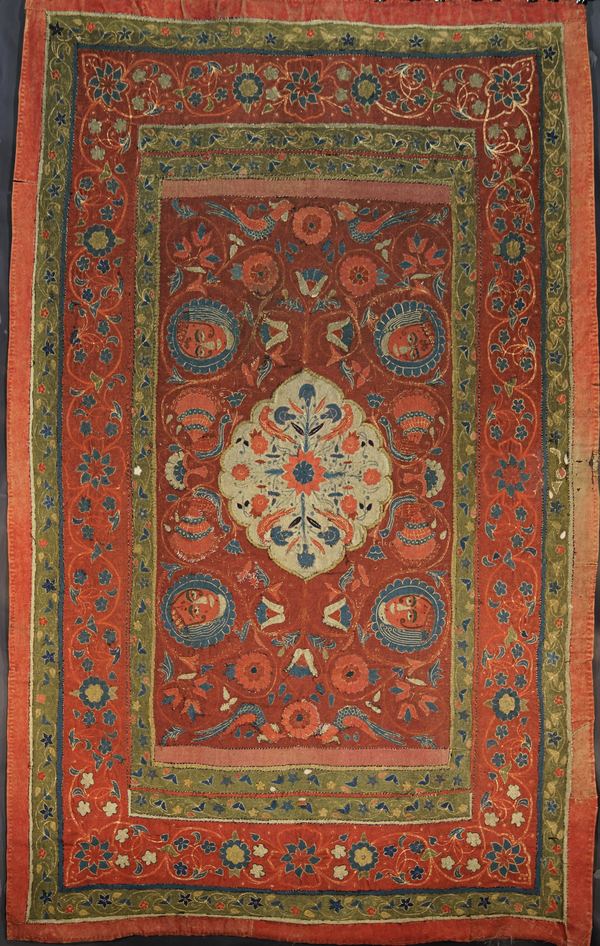
Case Study: The Acrobat (Victoria and Albert Museum)
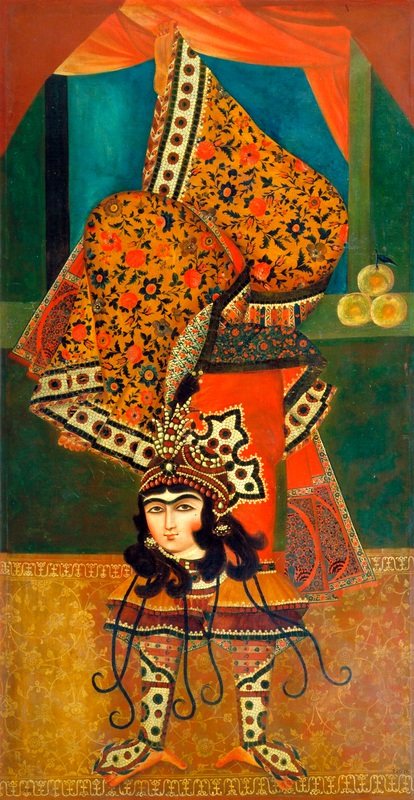
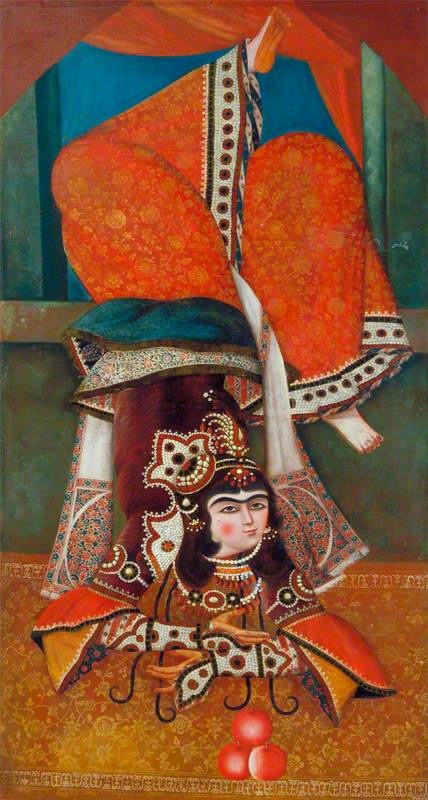
Two iconic paintings, which I argue are the work of Fath’Ali Sr., are versions of The Acrobat housed in the Victoria and Albert Museum in London.
- Composition and Posture: These paintings feature a woman balancing on her arms. In one version, her arms are fully extended; in the other, they are folded.
- The Rule of Three: Numerical symbolism dictates the composition. Three oranges are depicted in a state of balance—placed to the left of the woman in one painting, and directly in front of her in the other. Furthermore, the number three repeats across the composition: in the lines of her extended arms, within the borders of her attire, and in the physical breakdown of the balancer’s body, which is visually divided into three distinct parts.
- Textile Correlation: The intricate motifs on the floor mat in the foreground of these paintings bear an undeniable resemblance to Fath’Ali Sr.’s authenticated Rashti-Duzi masterpiece—the portrait of Prince Yahya in Yazd.
- Sufi Symbolism: Fath’Ali Sr. was a devoted Sufi, and his spiritual faith deeply guided his creative output. In Sufism, the number three represents the simplest framework to explain the mystical path: it symbolizes the triad of the Creator, the created, and the path to unity. It simultaneously represents diversity (1 → 2 → 3), multiplicity (as the first number where mathematical multiplication begins), and ultimate unity (3).
- The Philosophy of Balance: Mathematically, two is an even number sitting harmoniously between two odd numbers (1 · 2 · 3), number three serving as a literal symbol of balance. It also represents the universal human journey: birth, life, and return. By choosing a balancer, Fath’Ali Sr. selected a physical embodiment of balance, hardship, and the intense training required to traverse the spiritual path toward unity. Similarly, balancing three oranges requires immense skill, as the natural, irregular shapes of northern Iranian oranges—which are abundant in the Gilan region—make them difficult to stack. Given these themes, a more accurate and fitting title for these paintings would be Three or The Balancer.
Unattributed Works Abroad
A number of paintings now catalogued as the work of an unknown artist — held in museums abroad, including the Shalva Amiranashvili Museum of Fine Arts, part of the Georgian National Museum — are, in my view, also the work of Fath’Ali Sr.
Why Fath’Ali Sr. Remained Obscure as a Painter
The question of why Fath’Ali Sr. has historically not been recognized as a painter can be attributed to several factors:
- Sufi Detachment: As a devoted Sufi, Fath’Ali Sr. adhered to a philosophy of ultimate detachment, believing that he possessed nothing and nothing possessed him. This fiercely independent, non-materialistic mindset did not align well with the rigid etiquette and political sycophancy required to find favor in the royal court of Fath’Ali Shah Qajar.
- Progressive Aesthetics: His artistic vision was perhaps too progressive and avant-garde for contemporary Qajar audiences to fully appreciate.
- Neglect of Textile Scholarship: Historically, there have been limited scholarly studies dedicated to Rashti-Duzi. Because his textile masterpieces were overlooked, the full artistic value, depth, and cross-medium genius of his work went unrecognized.
- Geographic Bias: He operated in the newly expanding city of Rasht, a region that lacked the deeply rooted, classical artistic pedigree of traditional cultural capitals like Isfahan or Shiraz. Consequently, historians of Near Eastern art did not think to search Rasht for a prominent painter.
- Loss to Foreign Markets: Because Rasht operated as a major international trade hub with a heavy presence of foreign merchants, the vast majority of Fath’Ali Sr.’s finest works were bought up and exported to Europe or the Caucasus regions, removing them from local study.
- The Use of Pseudonyms: It is highly probable that Fath’Ali Sr. painted under a pseudonym or an artistic nickname (laqab), leaving his real name unrecorded on his canvases.
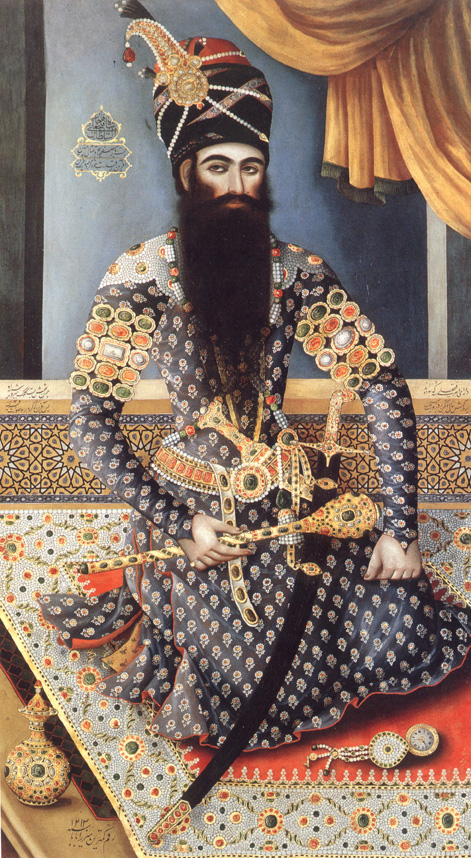
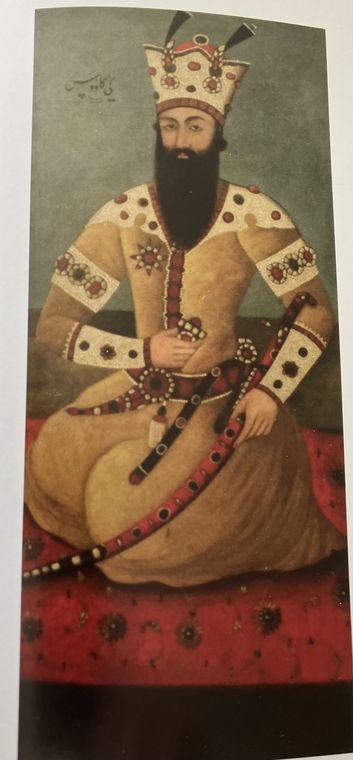
The same king, by two hands: where the court painter piled on jewels and splendor, Fath’Ali Sr. stripped the portrait back to something plainer and more inward. One is an elaborate court likeness of Fath-Ali Shah; the other, Fath’Ali Sr.’s, is of a humbler figure — the king who betrayed Prince Abbas Mirza in the Perso-Russian war, just as Kay Kavus betrayed Siyavash (the epic of Siyavash’s death in Ferdowsi’s Shahnameh).
My Opinion
This is a hypothesis that will need significant study and research to be proven — a road map of where to look, and part of the biography of Fath’Ali Sr.
Looking at the paintings that I believe, with good probability, are his work, and placing them in chronological order, I have come to the following conclusion.
Fath’Ali Sr. was a pupil of Muhammad Sadiq (active 1740s–1790s) — or Muhammad Sadiq was his mentor — because there are significant similarities in the foreground and background, the patterns, and the execution of the textiles in the paintings of Muhammad Sadiq, Mirza Baba, and Fath’Ali Sr.
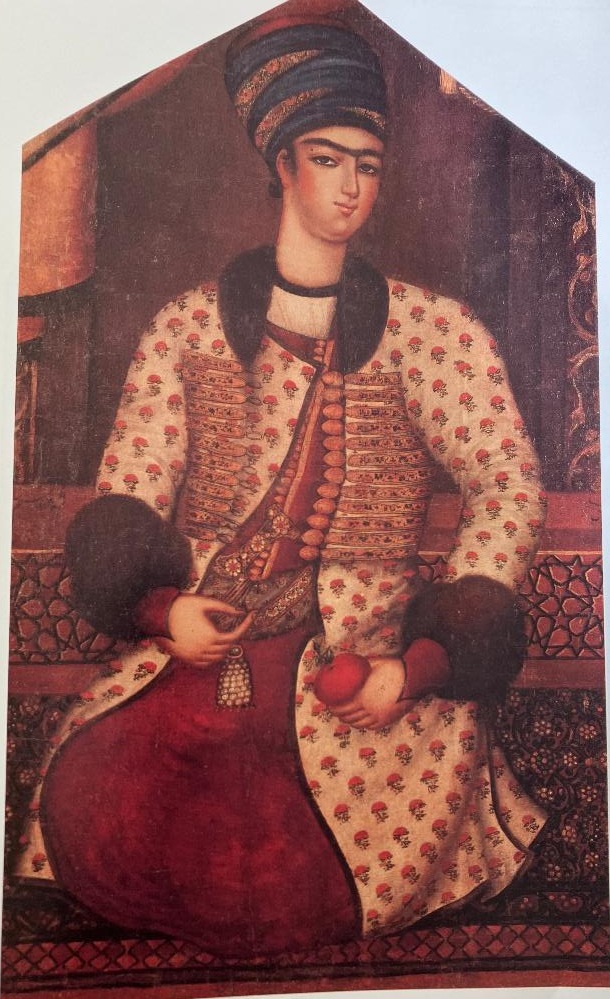
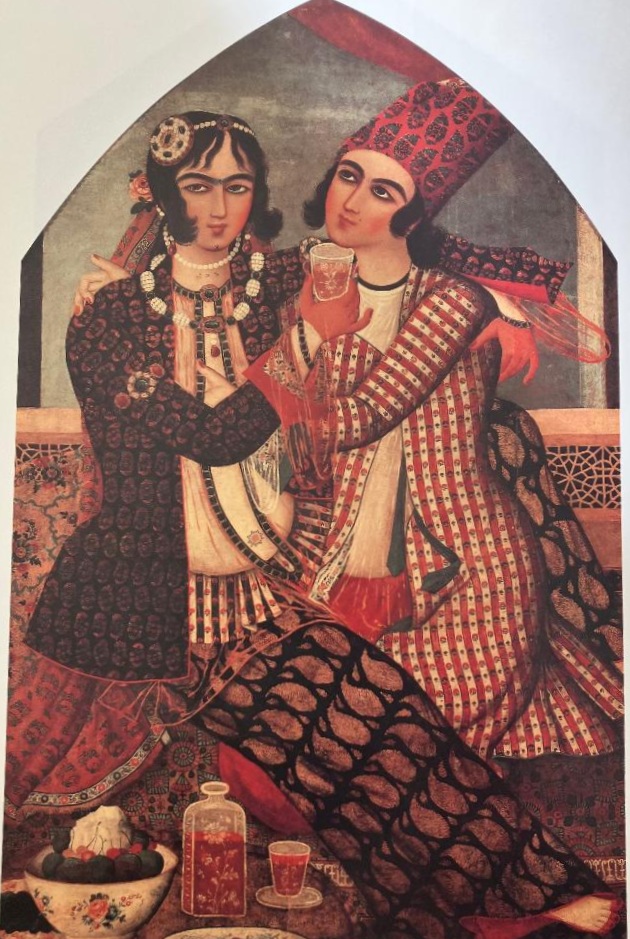
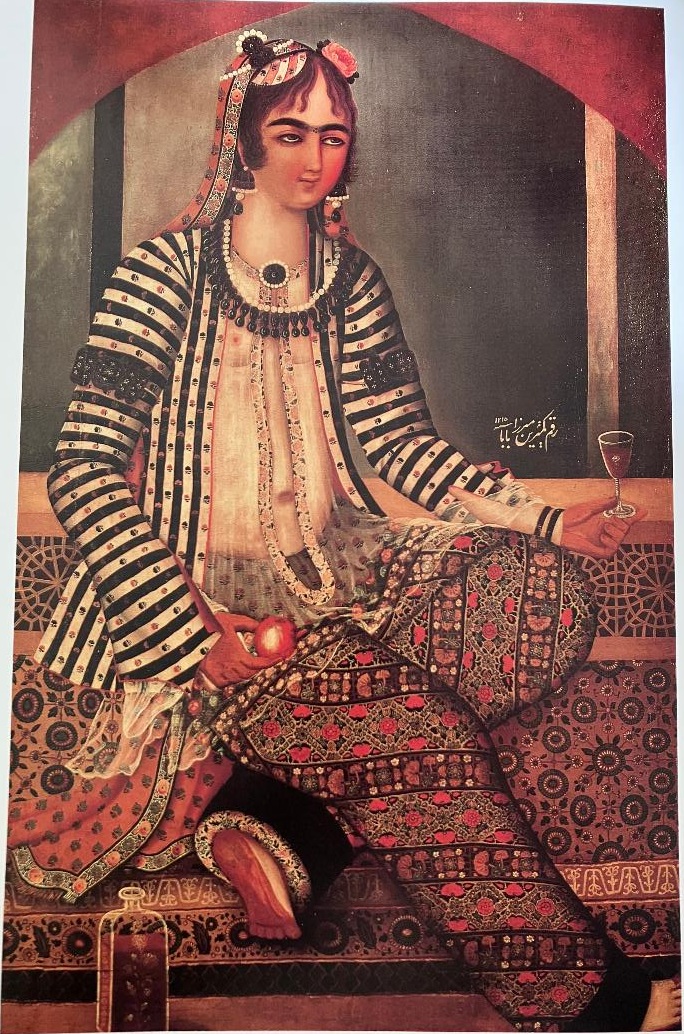
While Mirza Baba was Naqqash-bashi (chief painter) in the early reign of Fath’Ali Shah, Fath’Ali Sr. was a court painter, and he probably painted a portrait of Fath’Ali Shah featuring a pillow with a Rashti-duzi textile design and the number three worked into the pillow and other areas. Before or during Mirza Baba’s decline, Fath’Ali Sr. left his position as a court painter. He continued to paint portraits of the royal family — Prince Yahya and Prince Muhammad (who later became king) — outside the court of Fath’Ali Shah. He admired Abbas Mirza and probably produced some work for him.
He later returned to the court of Mohammad Shah and made two royal tents for it (both Mirza Aghasi and Mohammad Shah had mystical leanings). His activity ended around the close of Mohammad Shah’s reign, which suggests that he either retired or passed away. His son, Fath’Ali Jr. (Agha Koochek), then took over his workshop and continued along his path.
Conclusion
Despite the compelling visual evidence presented here, further archival research and biographical investigation are required to uncover the full scope of Fath’Ali Sr.’s life. Properly evaluating and discovering more of his surviving works will allow art historians to elevate him to his rightful place—not just within Qajar art history, but within the broader canon of Iranian and global art.
← Back to My Conclusions